ceramics design.
competition by:
competition theme:
open to:
result:
official website:
zeki yurtbay seramik
routines, daily life, body and movement
national – students
participant
https://www.dogadansanatasentasarla.com/2023-kazananlar
little explanation:
i have entered this competition with three different projects. be sure to check all of them out!
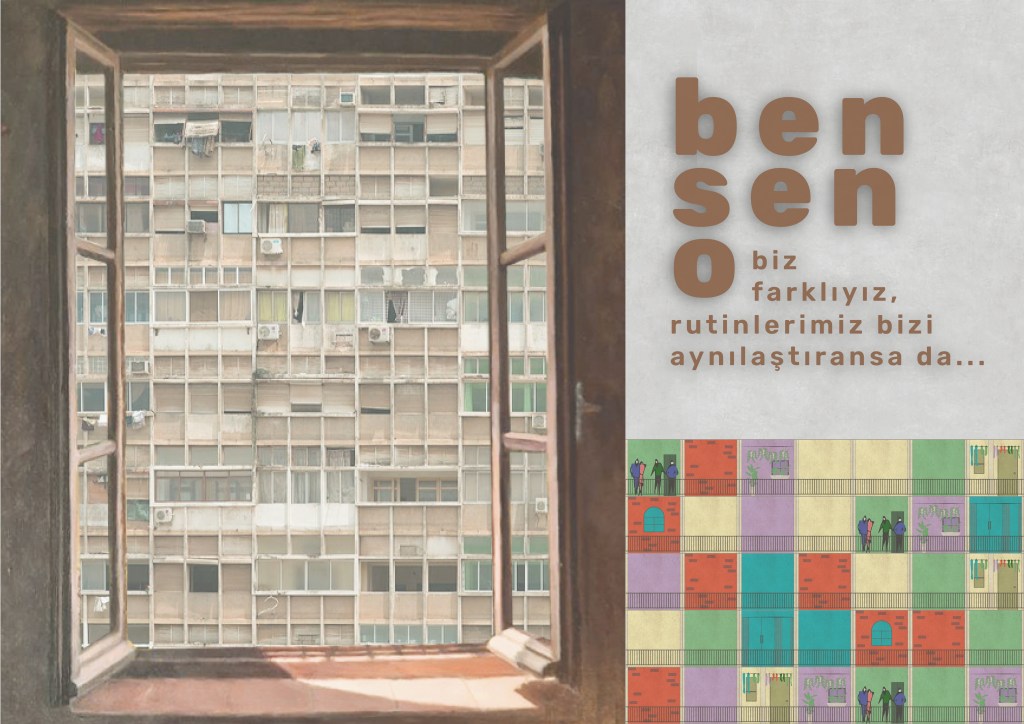
ben, sen, o
(me, you, him/her)
idea
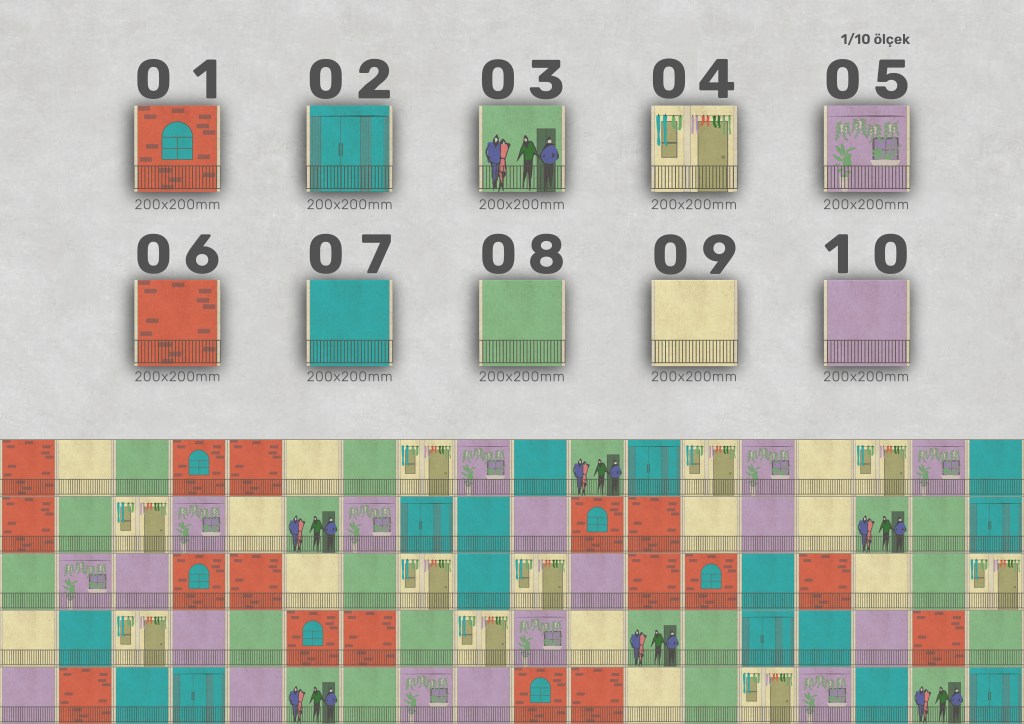
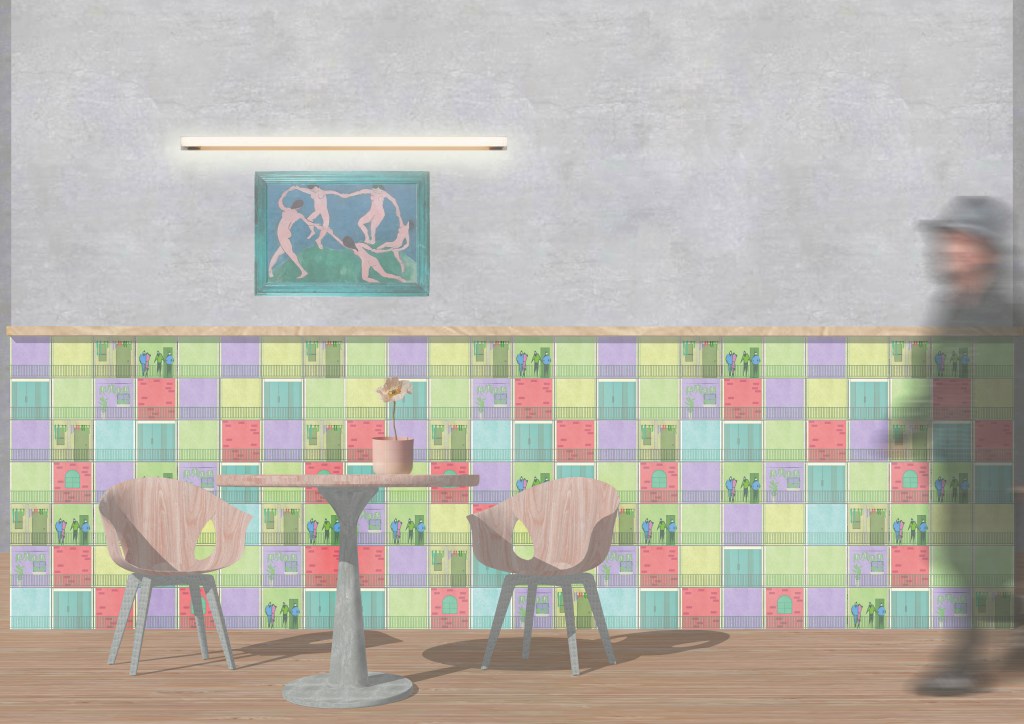
When we look outside from our window, when we look around the street while walking, we see the same ordinary buildings. The ordinariness of the buildings forms a routine, and we no longer notice them with our eyes—even if we do, we can’t tell them apart. But if we look closely, we see diverse lives within these ordinary structures. Some enjoy growing plants; their balconies are filled with greenery. Some never go a day without seeing their friends; laughter echoes from their homes. Some proudly display their freshly washed laundry like a shop window display.
Human life is made up of routines, but also includes events and situations outside the routine. This design aims to tell different life stories through the same buildings. It repeatedly brings to light the details people might not notice at first glance. Balcony railings and expressions reflected on the facade walls represent the routine, while different colors and themes break that routine.

çetele
(tally)
idea
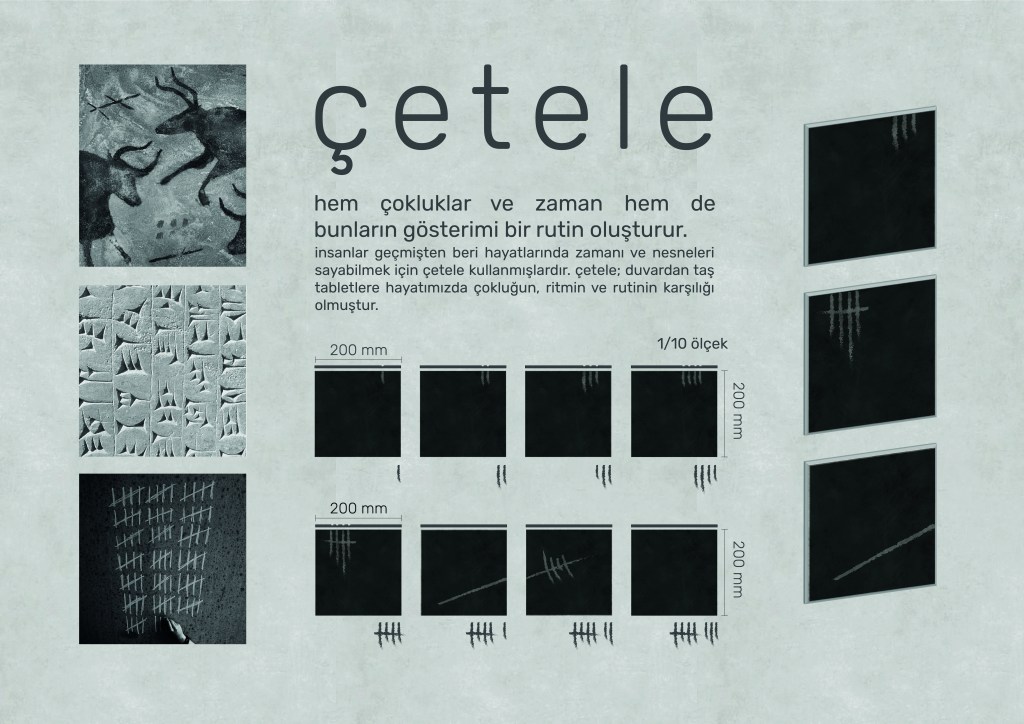
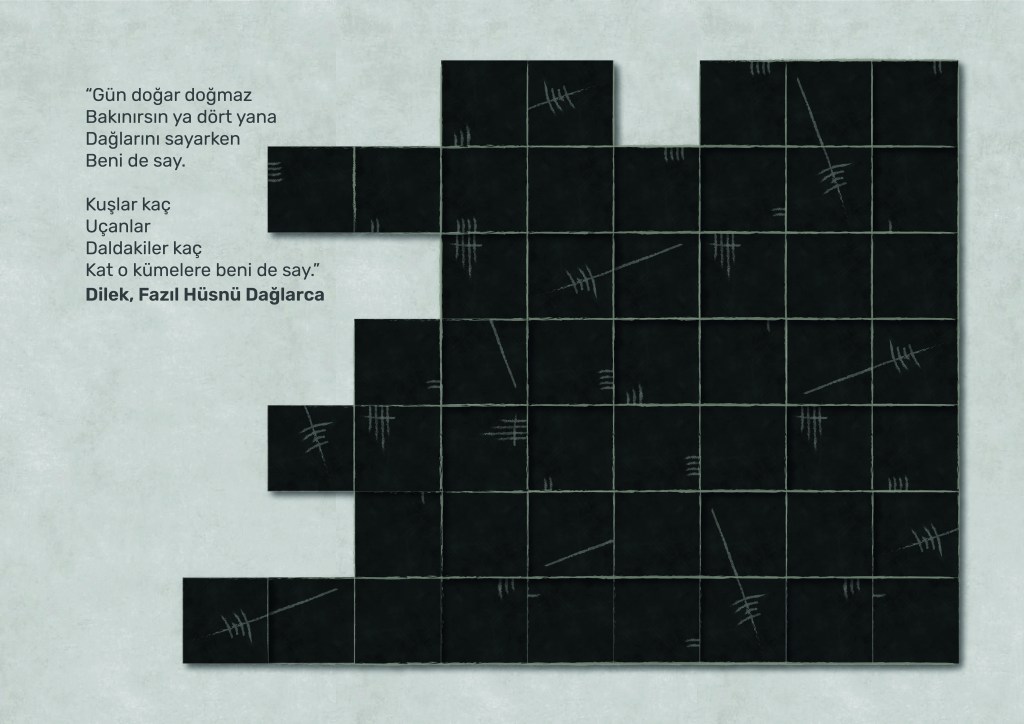
Since ancient times, people have counted in order to calculate, plan, know, recognize, and understand. Sometimes what they hunted, sometimes what they gathered, sometimes what they harvested, sometimes what they stored… Sometimes they count the days to understand how much time has passed or how much time is left.
Time creates a routine. The way we represent it is also a routine—one line shows one day, another a different day, and yet another a completely different one. This system gives rise to the tally chart and has reached us today.
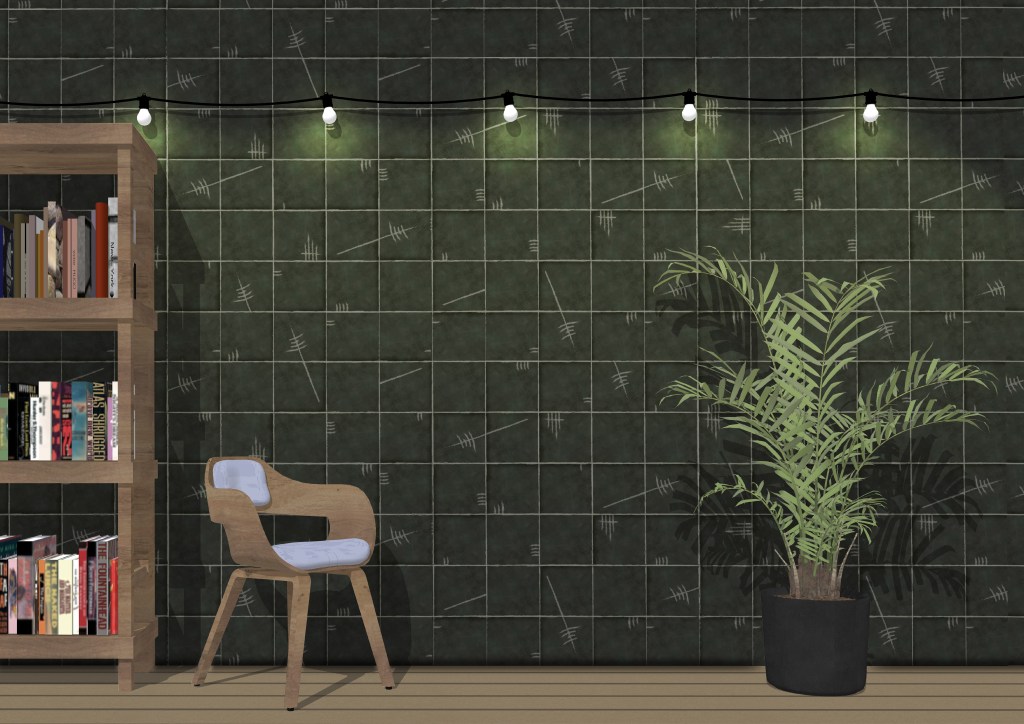
Counting time is necessary to know, recognize, and understand both the past and the future. This design aims to reflect that act of counting. Each ceramic piece shows either a full tally chart or a few elements of it. Using relief, the notched marks found in tally charts have been deepened, designed in a way that evokes cuneiform script.

rubato
(rubato)
idea
Our bodies and minds get used to events that progress through repetition; our lives, which turn into routines, offer a peaceful rhythm that masks the uncertainty we no longer feel. Amidst ordinary things, differences become more noticeable. As routines become more entrenched, changes in life start to stand out. That’s why we must question our rhythms, give space for dancing, distinguish the differences, and embrace them.
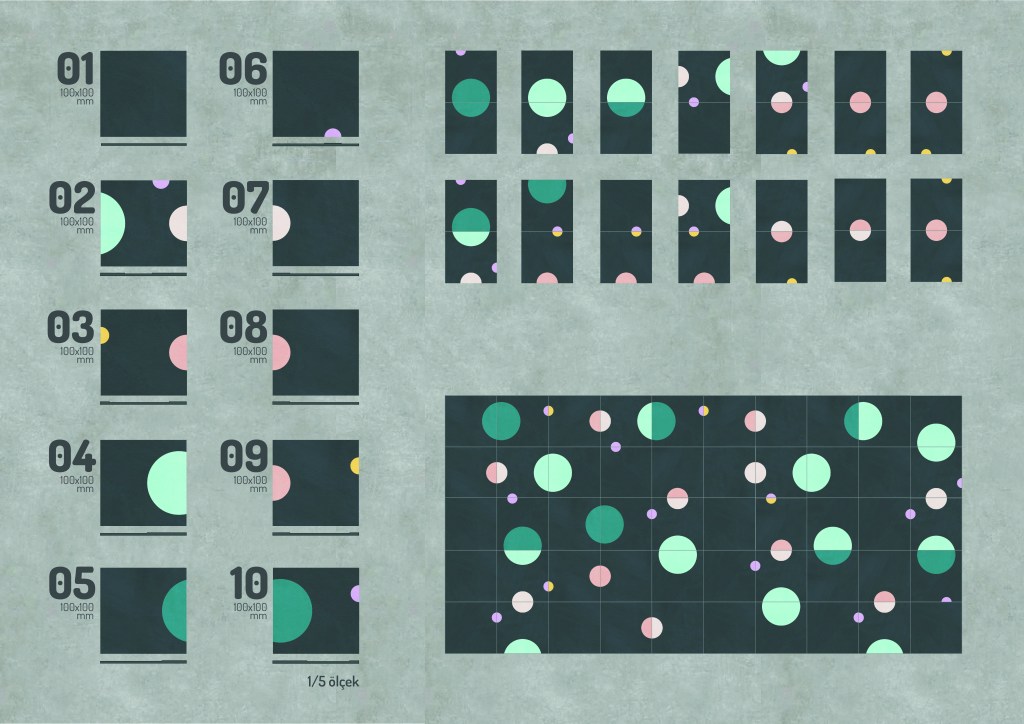
Ceramics create patterns within themselves—patterns that result in uniformity but consist of individually unique pieces. In this project, the pieces are designed to stand out when considered as part of a whole. The tiles, which can be arranged within routines, are designed to be assembled only in specific regions based on the user’s choice. The design is dedicated to the idea that each unit can exist as itself within the whole.
In the ceramics, a dark tone is chosen as the base so that the colored pieces can stand out. Bright and vivid colors are emphasized through reliefs. A richness is intended to be born from the combination of various colors.



 this is not.