As a master of animation, Hayao Miyazaki has a huge impact on the way I think about worldbuilding, and the act of drawing, of giving form to thought and imagination.
In this entry, I turn to one of his most celebrated works, Spirited Away.
I try to step into its world and search for the logic behind its wonder.
I used the book “The Art of Spirited Away” as a source.1
I believe Miyazaki’s spaces offer more than atmosphere. They propose a way of thinking about architecture itself: as narrative.
In Spirited Away, architecture is not a stage for a story, It is the story’s author.
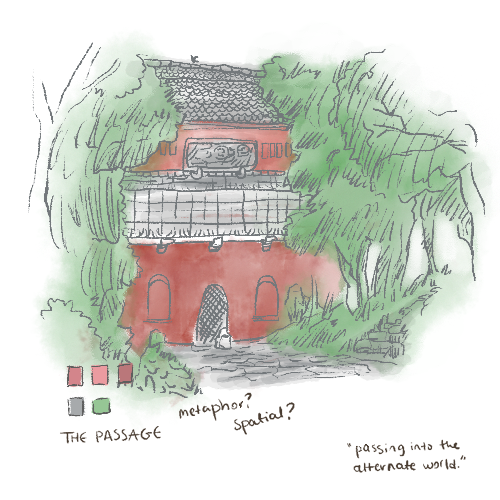
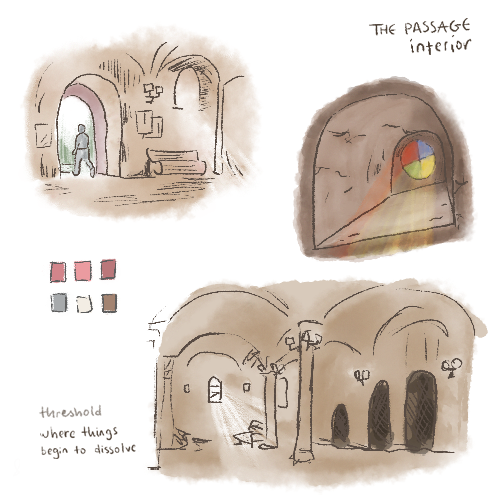
The passage is the first fracture in reality. It carries the weight of a threshold.
there are spaces full of light and shadow ended up looking realistic and pretty predictable as well.
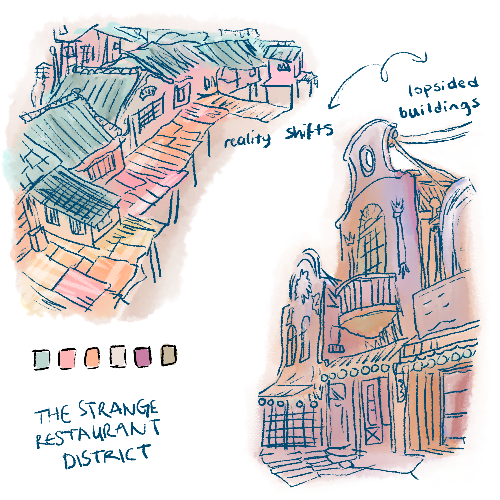
then comes the disorientation; empty streets, rotting theme parks, parents turning into pigs. Buildings are no longer familiar. and they reject the ordinary.
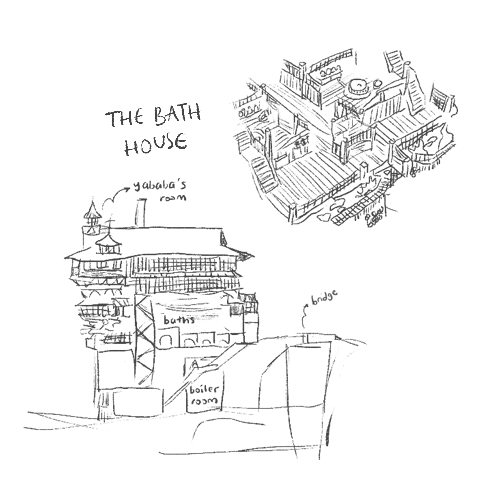
Then: immersion. The boiler room’s clanking ritual, the workers’ quarters filled with noise and friction, the sacred act of washing gods.
The building exerts control. It tests and teaches.

Convincing fiction is not born from ideas alone, but from the spaces that shape those ideas. When a character is transformed by the rooms they pass through, the worldbuilding succeeds. as architecture turns into a narrative.
 this is not.