Aldo Rossi‘s idea of architecture is that it is a “scena fissa delle vicende dell’uomo” -or fixed stage of the events of the man, judges architecture as memory and rituals.
but Aristide Antonas, the architect of the amphitheater house wrote an introduction to the idea of the empty platform in his text, Amphitheatric Dwelling1 . he leaned more towards the concept of the platform and the emptied space itself.
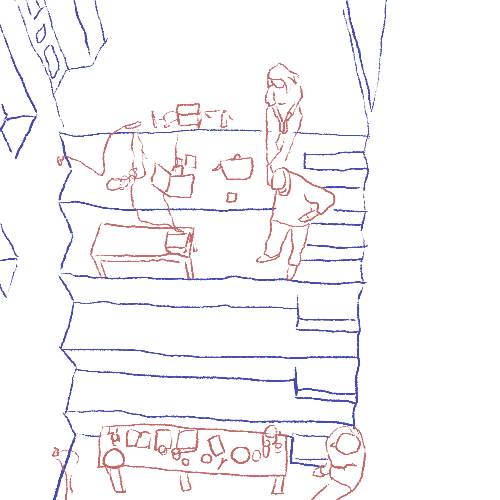
He seeks out this concept in his building,
amphitheater house.
“The dwelling’s steps are not there because there must necessarily be something in front of them to serve as an event or the home’s center or main stage. On the contrary, if there is such an elusive center, it is the steps themselves. What do these steps face? More than anything, they face themselves. The theme of the house becomes the parallel seating itself, and the possibilities it offers for unique encounters.” (Antonas, Amphitheatric Dwelling, para. 11.)
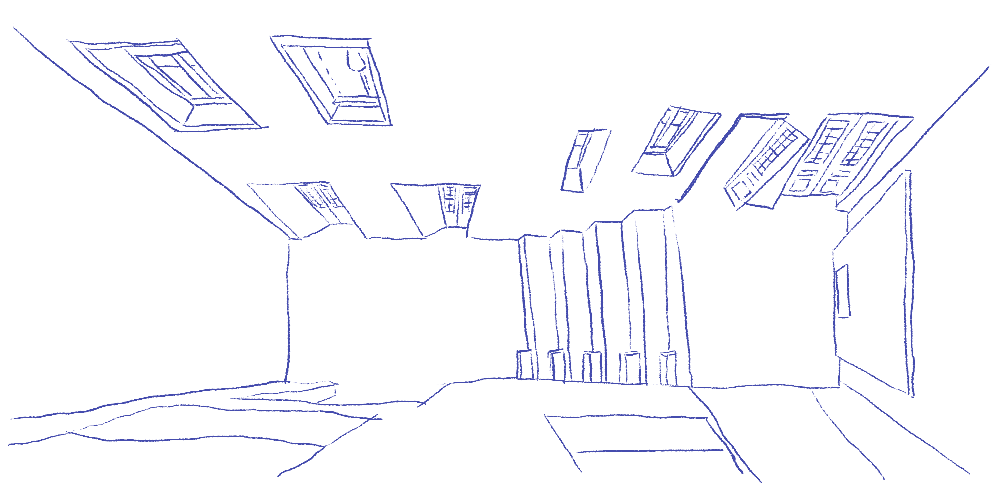
“…this reversal between viewer and viewed becomes the preliminary condition for this particular inhabited platform.” (Antonas, Amphitheatric Dwelling, para. 12.)
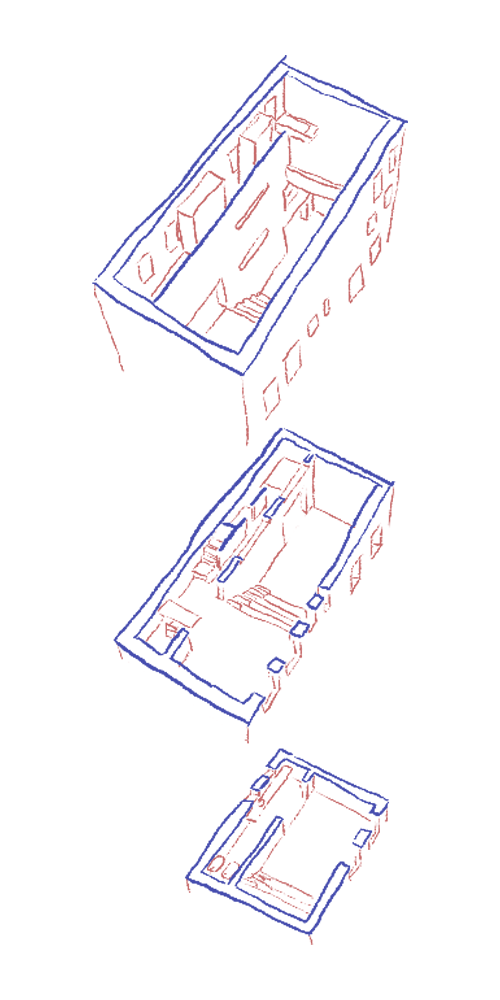
“If we place a glass of water on the second step and a laptop on the fourth, we introduce a certain disorder into the space but at the same time assign a role to the amphitheater. A pillow and a book create a different amphitheater entirely. Thus, the intention in designing a habitation platform is not to define positions for objects, but rather to enable the possibility of such positions. The idea of order and disorder becomes central in this conception of the house.” (Antonas, Amphitheatric Dwelling, para. 16.)
Objects drift here. Roles shift. The architecture holds still.
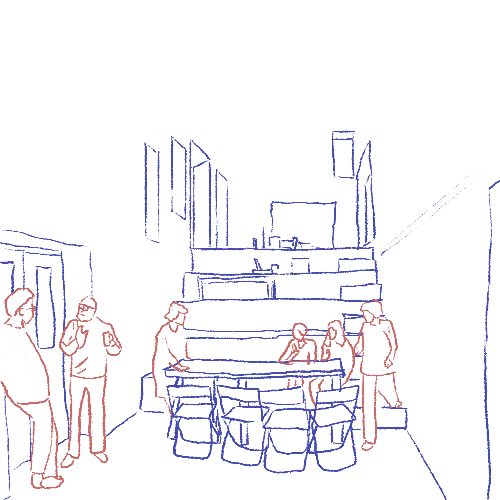
If Rossi’s scena fissa was an echo of collective pasts, this version is a framework for potential memory, not what has happened, but what might.
 this is not.