Steps towards a configurative discipline1 – I read this article written by aldo van eyck, published in forum in august 1962. here is an attempt to think again, draw again, dwell again.
we cannot breathe one way, either in or out.2
most architecture is brutally splitting and favoring the other. inside or exterior, open or closed, private or public, logic or emotion, permanence or change… Aldo van Eyck calls these twin phenomena.
When we choose one and suppress the other, the human scale dissolves and alienation starts.
just planned wasteland.3
Within the tyrannical periphery of such objects there is no room for emotion; nor is there any in the resulting emptiness between these objects. Emptiness has no room for anything but more emptiness. All urban ingredients curdle, all urban colors clash. Just planned wasteland.
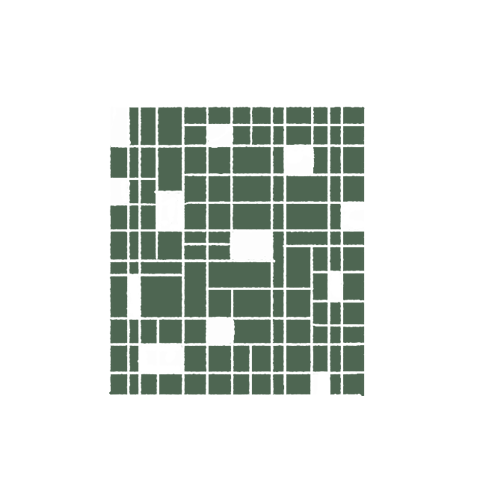
Arranged in a strict grid, with dead voids in between
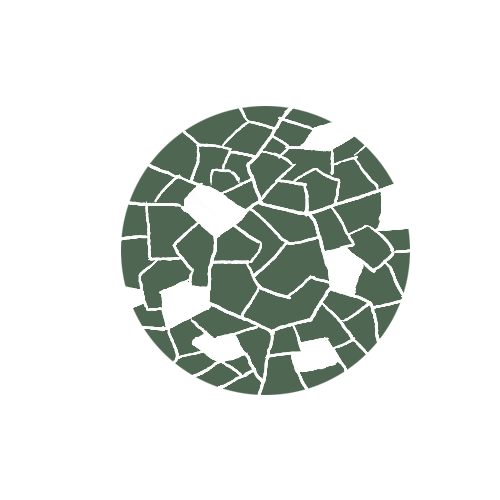
varied scales that are human, active voids in between
Modern cities push out the unpredictable.
There’s no resonance. No narrative. No emotional or social potential.
decentralization of important city-scale elements will lead to a greater appreciated overall homogeneity. Each sub-area will acquire urban relevance for citizens that do not reside there. (…) They will, moreover, induce citizens to go to parts of the city otherwise meaningless to them.
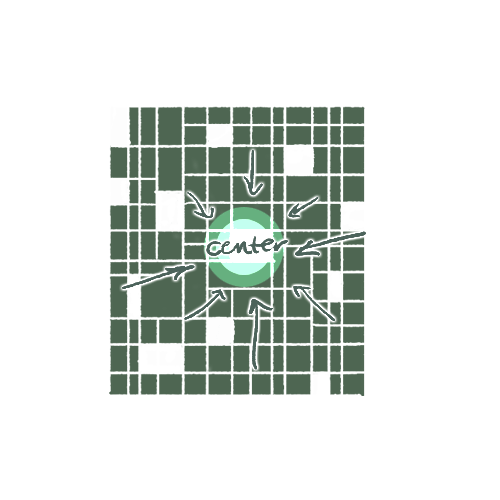
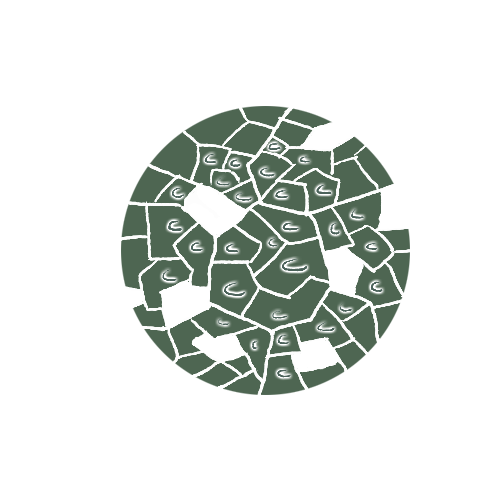
All ingredients are redefined and closely meshed.4
The house, for instance, is thus also part of the street, whilst the street, reinterpreted, is included in the house in that it is not necessarily exterior to it in the limited sense – nor for that matter are external living spaces. All ingredients are redefined and closely meshed.
But architecture forgot how to weave.
We no longer know how to compose multiplicity into something meaningful without collapsing it into sameness.
the city cannot be finalized, nor is it organic.
If it were possible to comprehend a city as a complex with a certain finality, or as a determined mechanism geared to a kind of urban existence which is fairly constant in time and space (…) it would perhaps also be possible to rely on the extended configurative discipline. But a city is no such thing – no longer at any rate. Nor am I prone to speak instead of a city as an organism, since this suggests quite predictable ‘natural’ change and growth according to fixed inherent impulses and external forces.
A city is not a machine — fixed, predictable.
Nor is it an organism — growing smoothly through biology.
HE SEES THE CITY AS A CULTURAL FIELD MADE OF RITUALS, STORIES, HABITS, CHANGES, DRAMA. iT DOESN’T GROW SMOOTHLY, IT JUMPS, SHIFTS, FORGETS AND BEGINS AGAIN.
he searched for places that allow something to happen. doesn’t demand but just allows. in the idea of twin phenomena, we can find a kind of balance, not through opposition, but through coexistence.
to quote him once again: “chaos is as positive as its twin sister order.5“
 this is not.