Aldo van Eyck sought to rethink the relationships between spaces.
Not as isolated forms, but as a connection of them. Spaces between spaces.
I’ve previously explored his text “Steps towards a configurative discipline”. He thought that architects should try and design thresholds rather than forms. resist the urge to divide, and give shape to what lies in-between.
Now, I’ve turned to The Amsterdam Orphanage, to see how he found the pyhsical and architectural result.
play and structure, freedom and rhythm, part and whole.

At first glance, the form of the orphanage appears modular. domes and courtyards repeating in a rhythm.
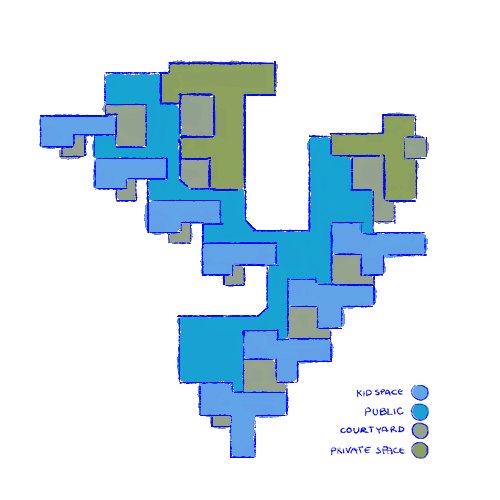
he actually refused rational-modernist grid in his text, and the way he uses the modules don’t contradict his text, but strengthen the idea of relational repetition.
each part is slightly adjusted in response to context, to movement, to life.
Light, here, becomes another threshold:
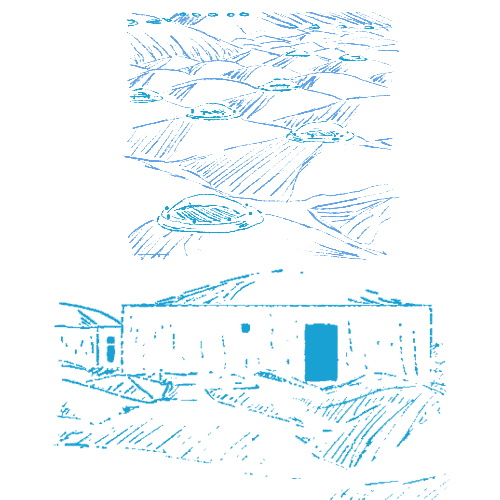

not flooding in, but arriving gradually. marking the passage of time.
bridging between outside and in.
 this is not.