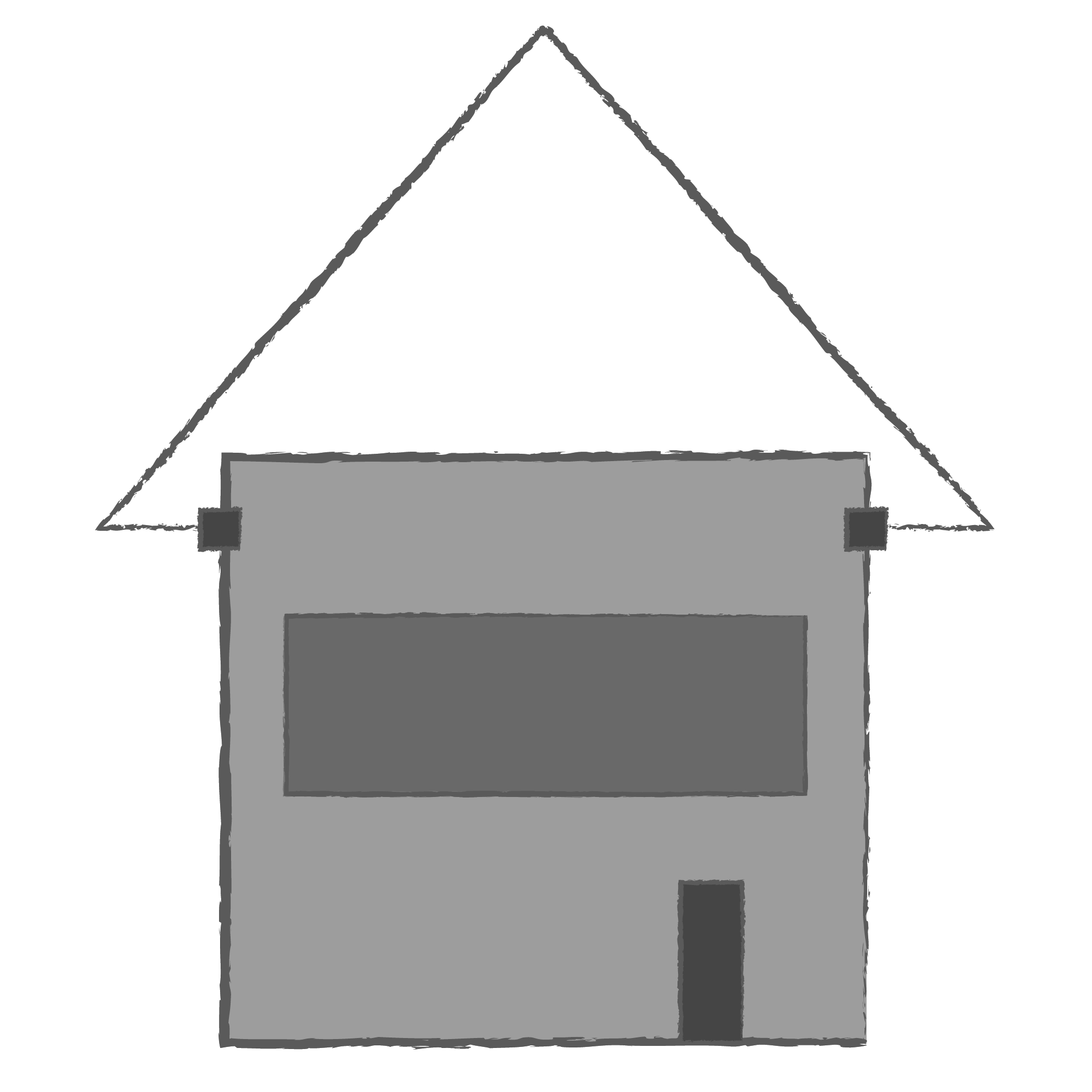
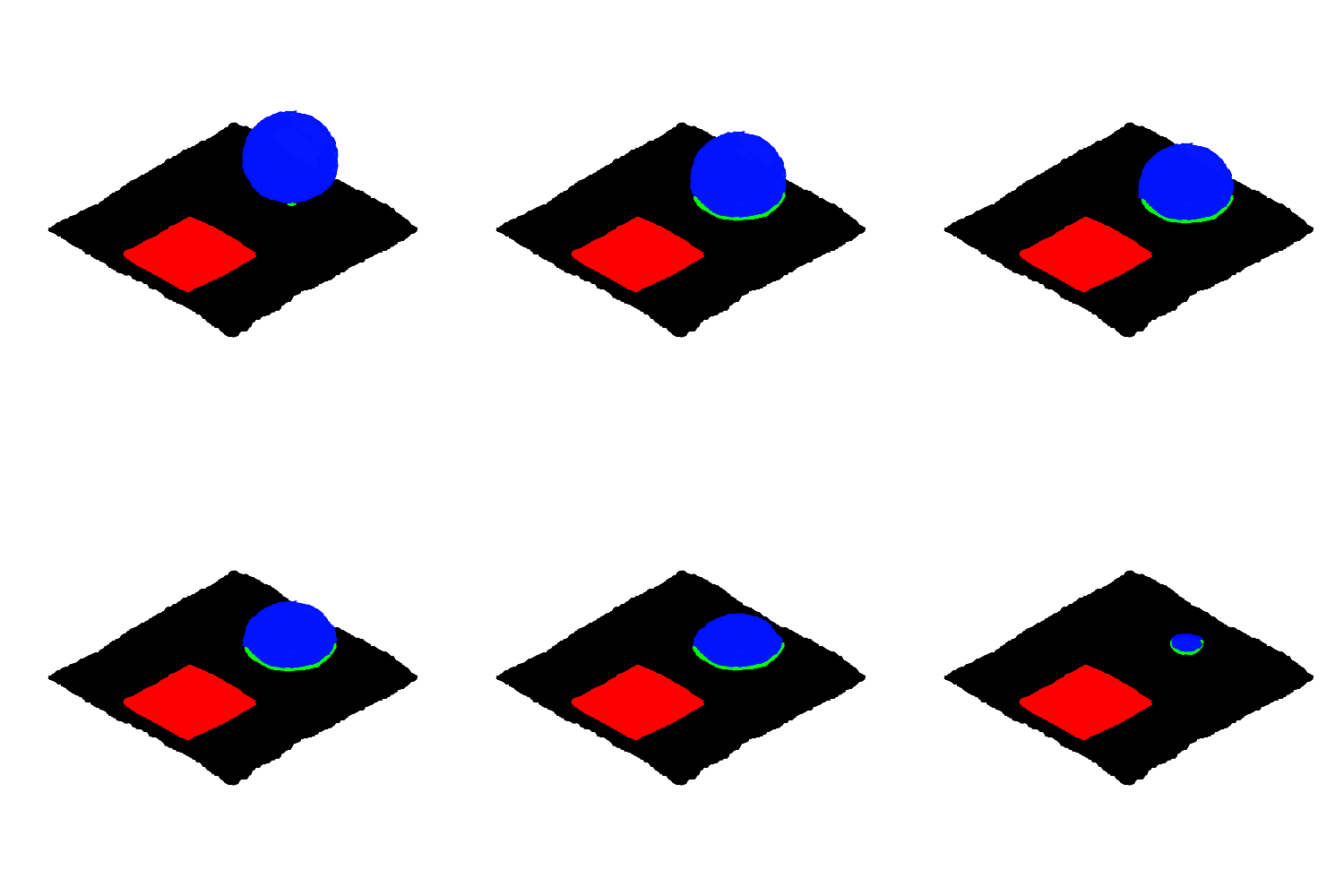
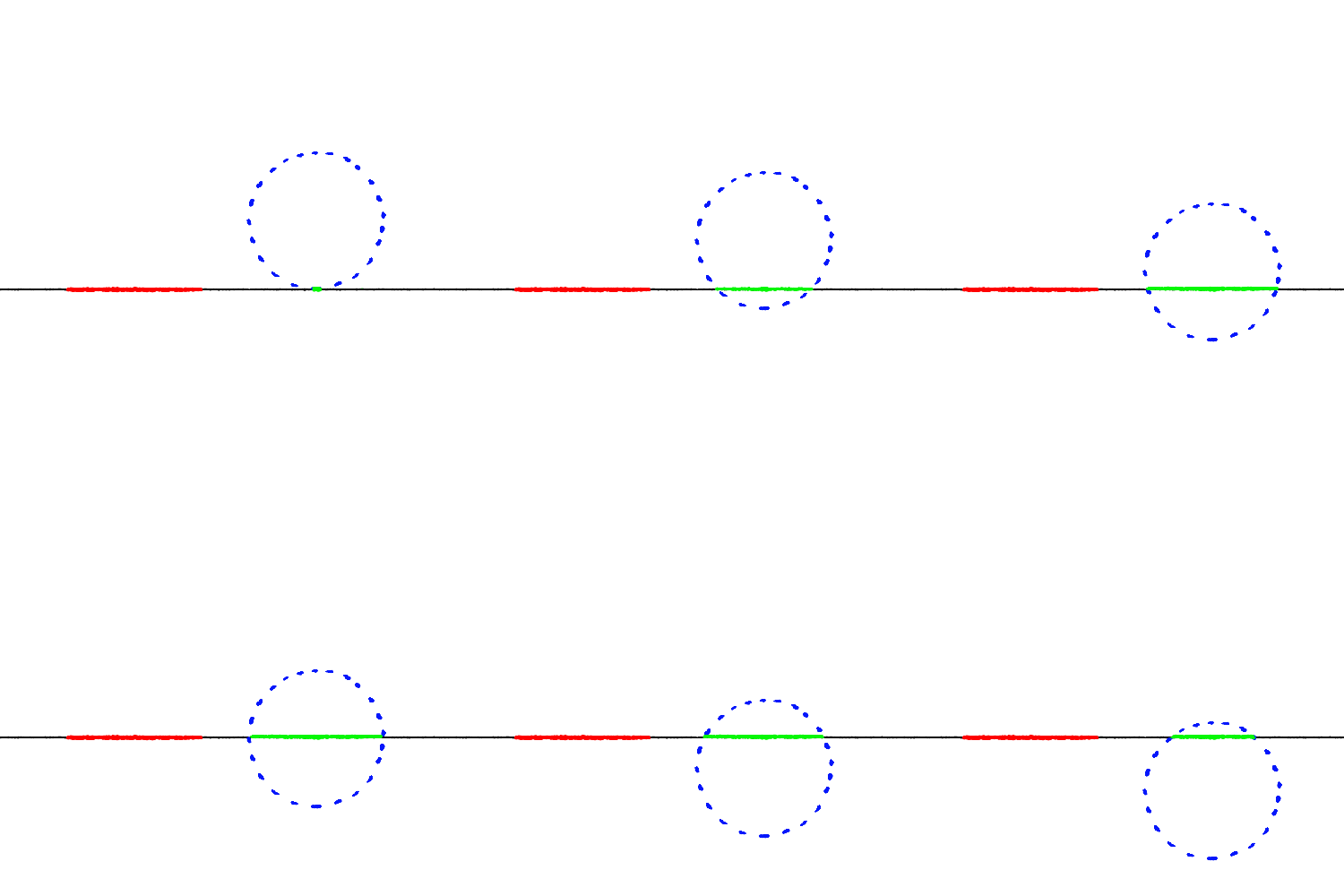
Flatland1 begins with a square living in a two-dimensional plane who encounters a sphere from the three-dimensional world. As the sphere introduces him to the third dimension, the square meets a dimension that had never existed for him before.
The book is not just an allegory about dimensions, but also powerfully discusses the prison of unfamiliar perceptions. Thinking about this prison, I began to consider how architecture is affected by it.
On any street, we move through buildings that we accept as natural, but are actually all shaped according to their designer’s perceptions and the dimensions they know. These reflect invisible hierarchies of certain perceptions to us.
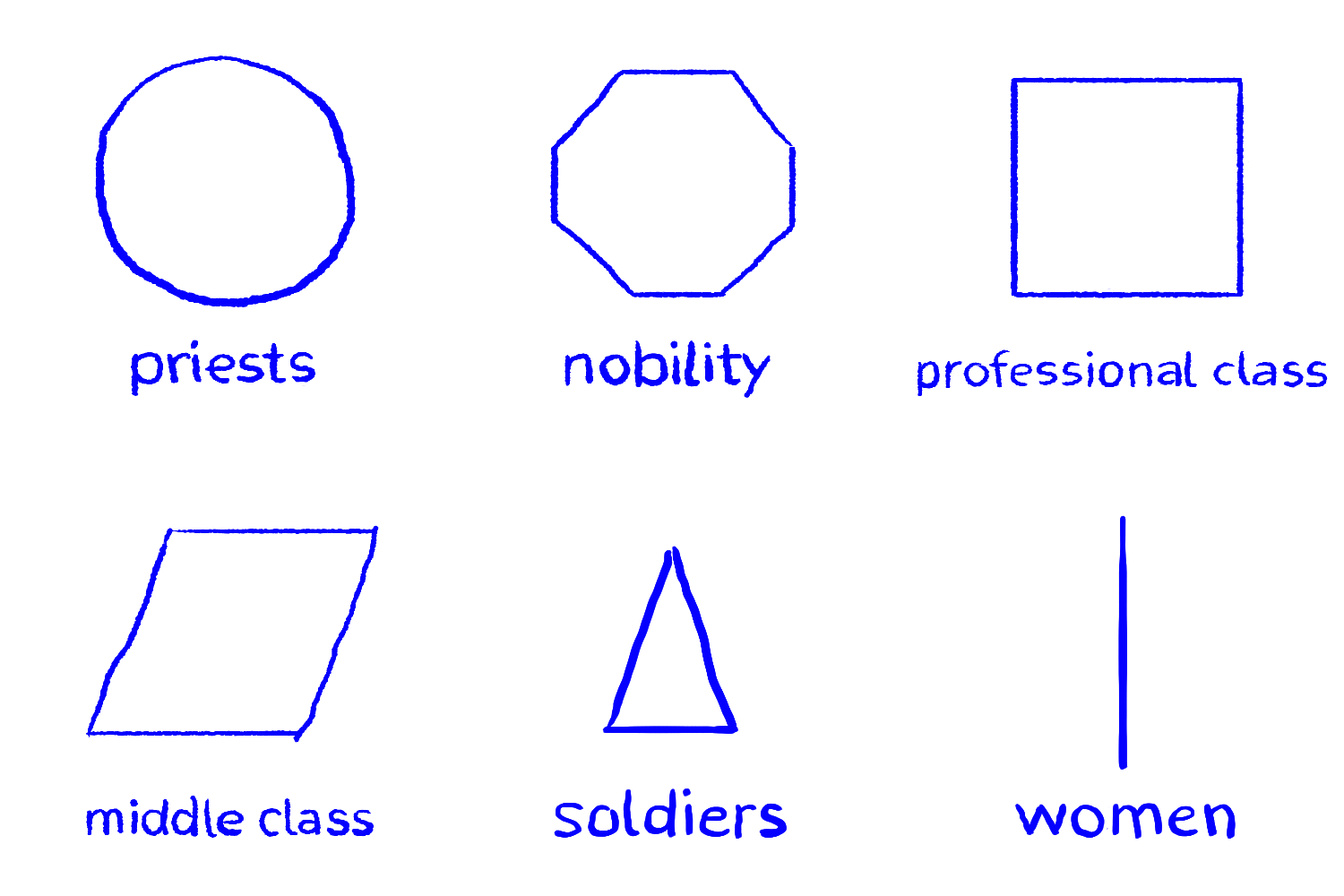
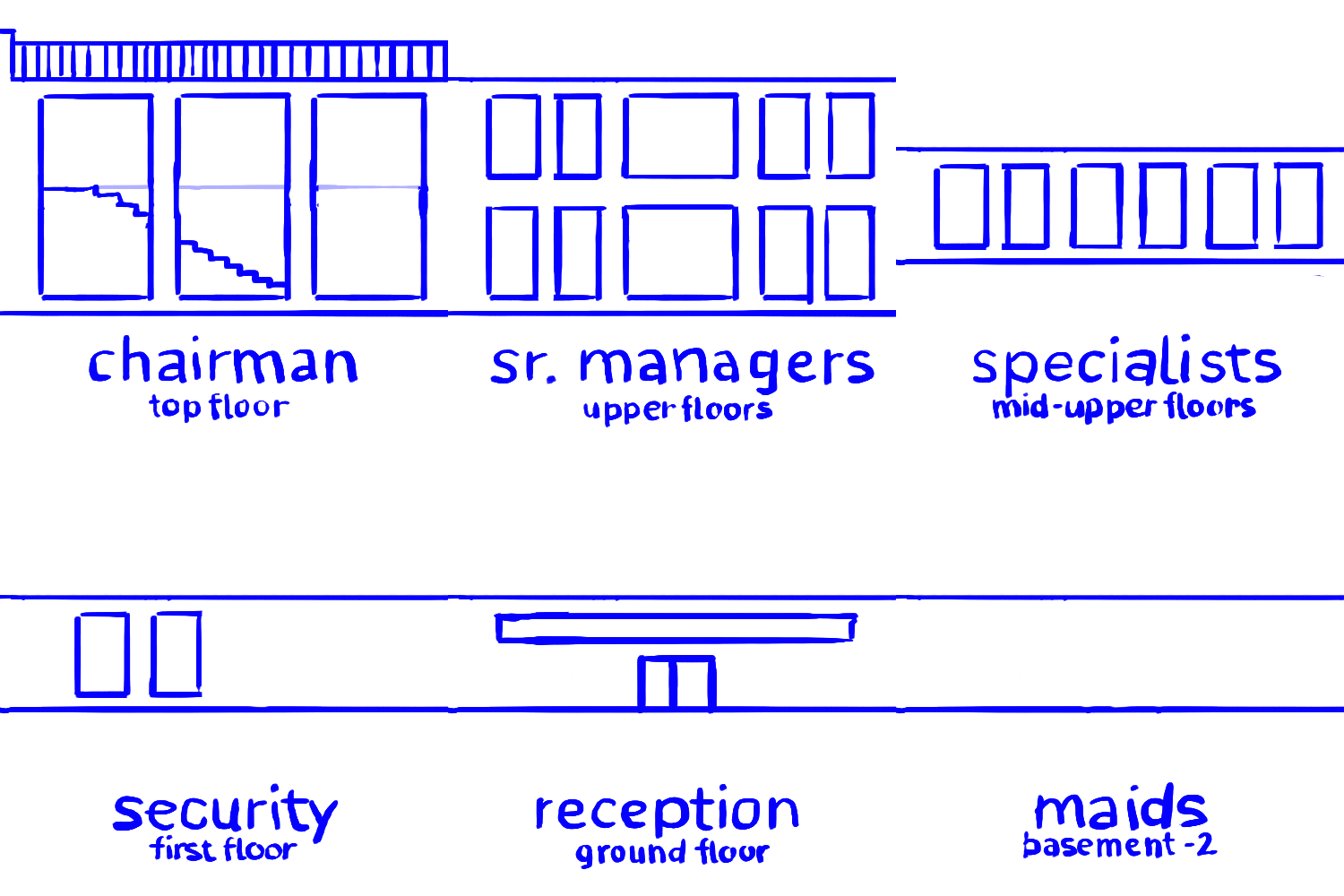
Abbott’s geometric social hierarchy relates to how architecture often reinforces or challenges social structures
In Flatland, geometric hierarchy appears as natural law. Architecture does the same in our world: the CEO’s top-floor view – the windowless call center, the main entrance versus the service entrance, stairs as the “proper” entrance and ramps as “alternative.” These are spatial ideologies made concrete.
And we don’t even perceive these arrangements until something disrupts us.
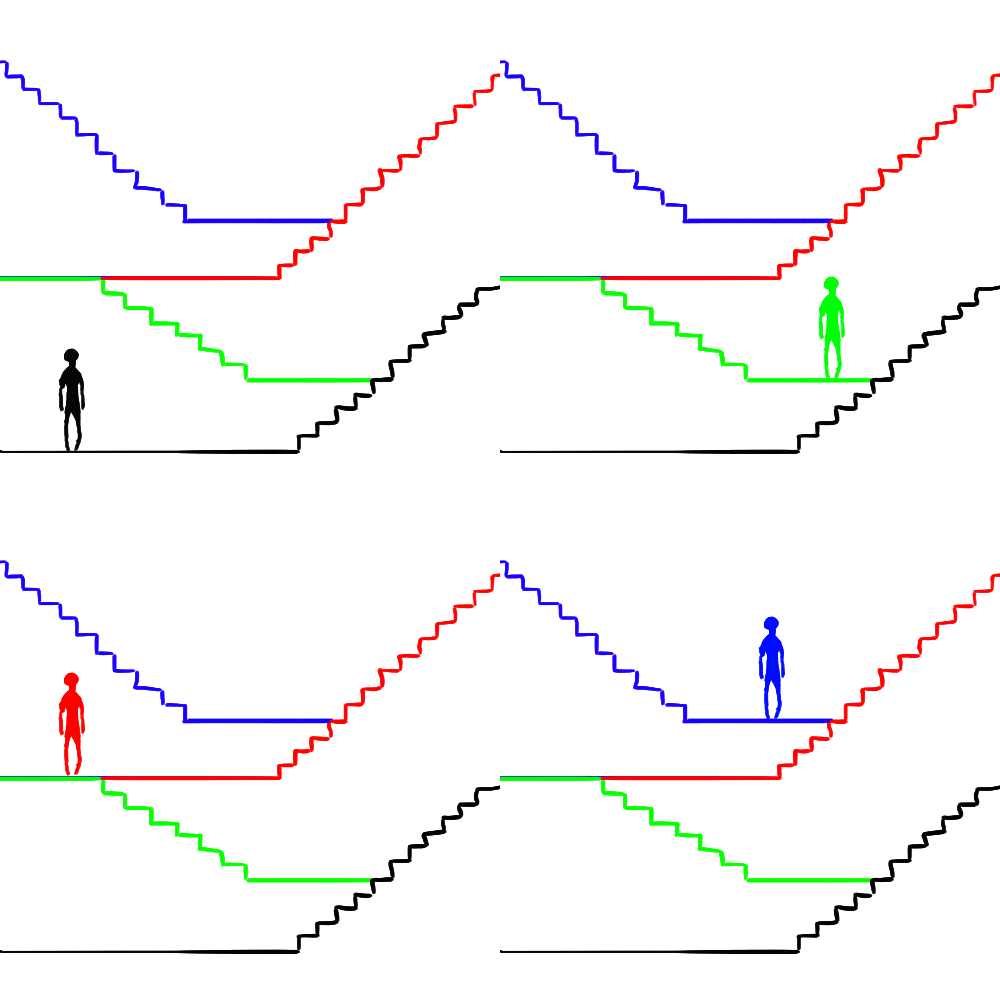
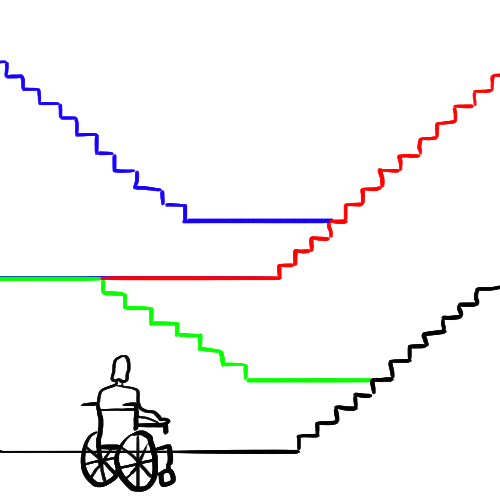
This is where Flatland’s deeper insight emerges: the square and the sphere are both right about their perceptions, and both are limited. Architecture can also be limited by its perceptions; when experienced through radically different bodies, it creates entirely different spatial realities.
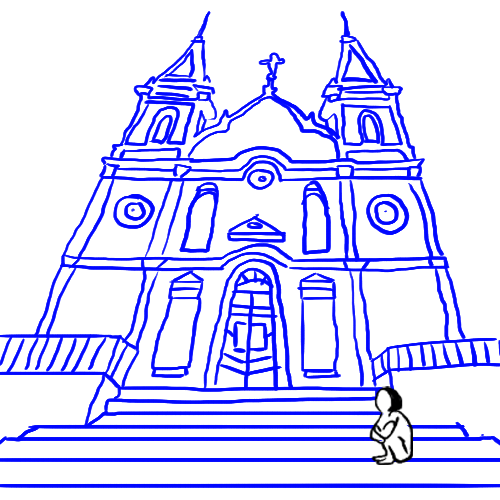
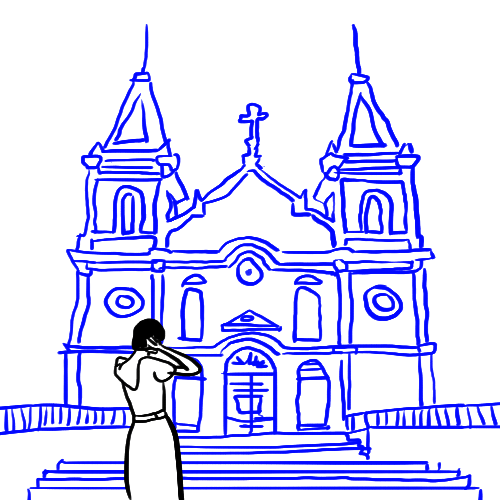
We’re all experiencing genuine reality from our particular dimensional constraint.
An error in architecture is made when one perceptual plane is privileged as “normal” and all others treated as deviations. When the stair is the “real” entrance and the ramp is “alternative access.”
The Square isn’t stupid, he’s trapped by perception’s limits. We all are. The question for architecture: Can we design for dimensions we ourselves cannot fully perceive?
- Edwin Abbott’s 1884 novella which uses geometric shapes living in a two-dimensional world to explore themes of dimensionality, social hierarchy, and the limits of perception. ↩︎
 a bag of holding