While reading Italo Calvino’s Marcovaldo, or The Seasons in the City, one passage from “The City Lost in Snow” made me think more deeply about cities than perhaps any other:
Marcovaldo learned to pile the snow into a compact little wall. If he went on making little walls like that, he could build some streets for himself alone; only he would know where those streets led, and everybody else would be lost there. He could remake the city, pile up mountains high as houses, which no one would be able to tell from real houses. But perhaps by now all the houses had turned to snow, inside and out; a whole city of snow with monuments and spires and trees, a city that could be unmade by shovel and remade in a different way.1
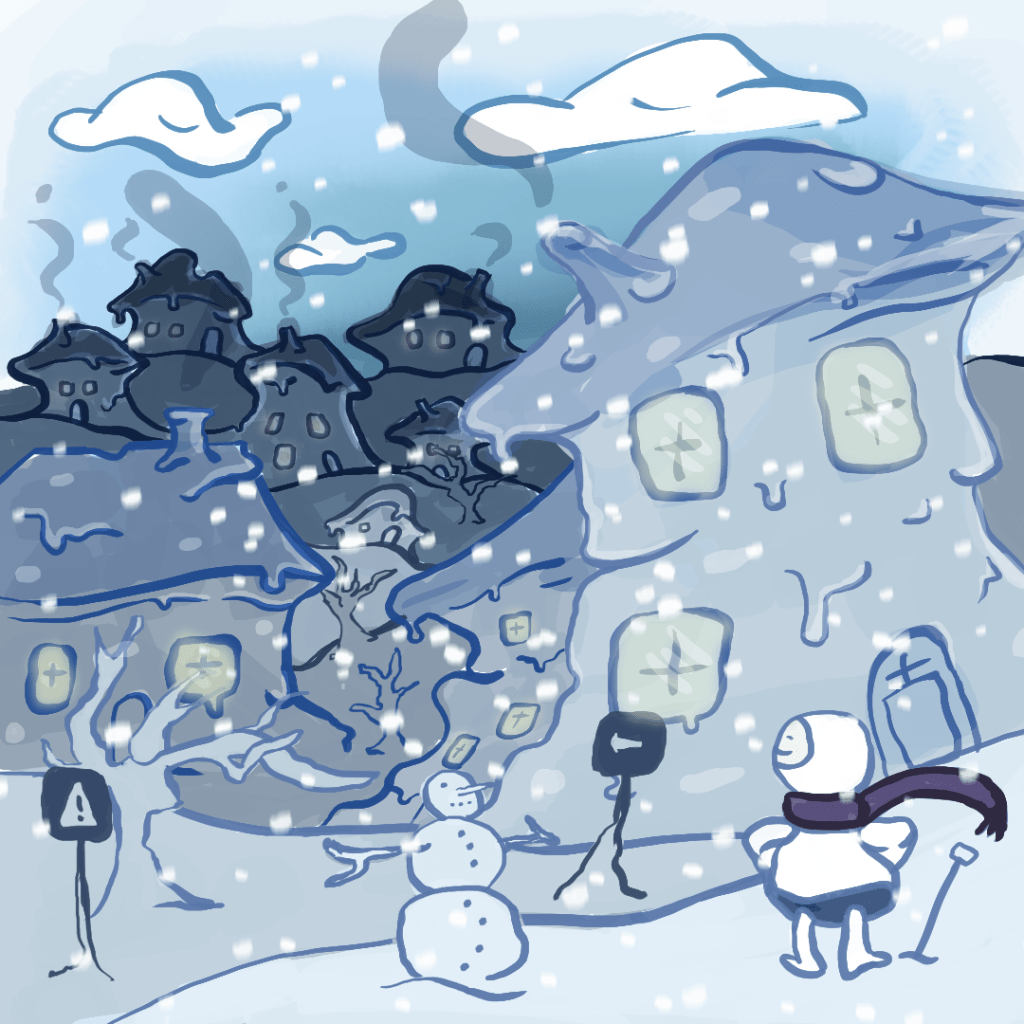
I found myself lost in Marcovaldo’s fantasy. that brief moment of freedom offered by something as temporary as snow, the possibility of creating his own streets, his own labyrinths, his own houses, his own city. This dream becomes a small but meaningful resistance against the rigidity of modern urban planning, against its top-down order.
that brief moment of freedom offered by something as temporary as snow, the possibility of creating his own streets, his own labyrinths, his own houses, his own city made me feel lost in marcovaldo’s dream. This dream becomes a small but meaningful resistance against the rigidity of modern urban planning, against its top-down order.
We live inside our cities, but our real cities live inside us. Why aren’t we allowed to bring the cities within us to the outside?
If a society, with its every member, could truly create its own city: shaped by desires, dreams, and memories, could it become like Marcovaldo’s snow walls: constantly changing, endlessly remakeable, a living organism?
- Marcovaldo or the seasons in the city, p. 18, 1963 ↩︎
 this is not.