
i have been writing about “building imaginary worlds”1 written by Mark J.P. Wolf. It was the push I needed to realize the relationship between worldbuilding and architecture. And today, I’m here to talk about the inspirational article that was referenced many times in the book as well, “Transmedial Worlds – rethinking cyberworld design”2, written by Lisbeth Klastrup and Susana Tosca.
First, I will break down the article and bring pieces from it to make it easier to adapt to architecture. I feel like I have to start with “transdiscursive” entities, which were developed by Foucault.
“transdiscursive”
The term describes ideas, methods, and creations that transcend multiple distinct discourses, disciplines, and fields of knowledge. what matters here is not “if the idea can be seen in another thing”, but “if the idea can start its own generation system in another thing”. This is very important to realize the distinction between generation and creation, which I’ve written about in previous entries. The essence of being transdiscursive is whether the idea entering another field can generate new knowledge in the field it moved into, using that field’s own logic.
Let me give an example for transdiscursive entities: let’s take Christopher Alexander’s “A Pattern Language”3 book (again, I have covered it in many of my entries). The author-architect discusses that to make an ideal design, there has to be a language, and if there is a language, there have to be patterns. Architects using these patterns to create a generative, systematic way will lead to great architecture. Software engineers saw this idea and took its core idea (which is design patterns), and they let that idea generate itself in the software field. (But Alexander criticized software engineers for forgetting the real purpose of design patterns: quality. Still, this is a good example to express why transdiscursiveness is important)
“transsystemic”
We can take the transdiscursive idea even a step further, because the transmedial world is not just transdiscursive, generating multiple works, but also transsystemic, generating worlds which are actualized in many different sign systems. (p.4)
Being transsystemic is a narrower claim than being transdiscursive. the same content is represented across different sign systems (verbal, visual, spatial, musical…). when talking about transdiscursive entities, what mattered was new knowledge production, but here what matters is if the same thing can exist under a different logic of signification.
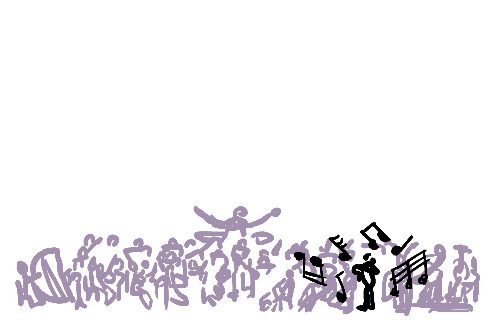
to understand the difference better, let’s look at two examples in music: in a symphony, the same work exists across three different sign systems: the written score (notation, code signification), the live orchestral performance (an auditory signification), and the conductor’s hand and body movements during performance (visual-kinetic signification). This is a good example to understand the transsystemic nature of music.

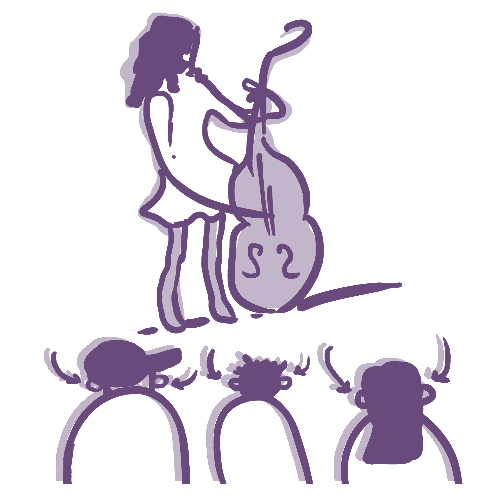
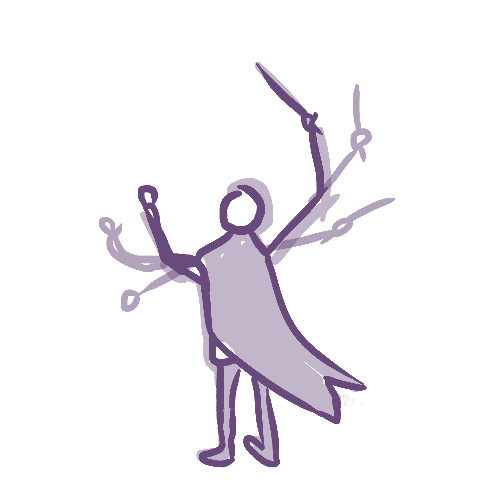
Now let’s think about polyphony ( each voice moving freely with its own distinct rhythm), which is a term used in music. That term was Bakhtin’s inspiration for the concept of “polyphony” in literature. He borrowed the term from music to describe how characters within a novel could exist as independent voices of their own. And once the term entered literary criticism, it became independent of musicality. The idea of “dialogism” that Bakhtin developed shows us that specific concepts born within music, like polyphony, can become transdiscursive.

“transmedial”
A transmedial world is an abstract idea of a world generated on the grounds of the first actualization of the world and the core elements this world contained, but not in anyways restricted by this. We must thus approach transmedial worlds exactly as worlds, not as “texts” or any given sign system, but as imaginary constructs shared by the cult audience with an interest in the universe, or twisting Foucault a bit, thinking of them as transdiscursive entities. (p.4)
“transmediality” requires that a world be both transdiscursive and transsystemic. therefore, the adaptation of a novel into a film does not necessarily mean that the world is successful from a transmedial perspective. if there is no world system suitable for adaptation into a film, or if this world system’s productions remain unchanged (not being generated) despite the use of a different system of signification (visual), the transmediality of that world will be called into question.
let’s take “Dead Poets Society” as an example. You know it as a classic/cult movie directed by peter weir. but some of you may know it as a book as well, written by N. H. kleinbaum. Kleinbaum wrote the book after the movie, “adapting” it to textual media. These adaptations are also called movie-novelizations, and i have no problem with them if they meet the condition of letting the new sign language generate the world in itself. but, in this particular example, when i read the book, i found it very hard to say it is successful in this criteria. little thought was given to the elements that literature typically focuses on like character depth, language, and novel structure. these were taken directly from the movie, which made the piece not transdiscursive, thus, not transmedial. this is not because the original world was not open to it, but it is because artistic (or in this case, commercial) choices that adapter made.
Now, i know that this example has been exhausted many times before, but I feel like I should still use it to show you what an actual transmedial world (which is both transdiscursive and transsystemic) would be like. Tolkien’s Middle-earth. Maybe the popularity of it is proof of the success of its transmediality. But anyway, let’s think about why it is a good example for our subject. Many of the readers/viewers like it because of the fantasy elements that transport you to another world, and we will talk about that in a second, but I think its success lies in it being successful across many sign systems. Tolkien was a philologist, which made him use language for the first steps of worldbuilding. He created many languages and made characters who speak that language, made mythology of the world that characters and their ancestors lived in, and he made maps to show the history and the topography of the world. He drew inspiration first from the language system, then from the writing system, the mapping and visual system, and the myth and philosophy system, and thus Middle-earth came into being. Tolkien did not create, but he let the world generate itself. When you have a system that works like this, generating new things easily, you can take it from any sign system to any other sign system. At the same time, we can also consider it being transdiscursive, because fictional languages created by Tolkien have entered the field of linguistics and, through their own rules (comparative philology, grammatical expansion), have given rise to independent academic work.
“worldness”
What characterizes a transmedial world is that audience and designers share a mental image of the “worldness” (a number of distinguishing features of its universe). The idea of a specific world’s worldness mostly originates from the first version of the world presented, but can be elaborated and changed over time. (p.1)
the system we keep mentioning of a world is described as worldness in this article. worldness of a world implies the generative system shaping it. to borrow wolf’s list: maps, timelines, genealogies, nature, culture, language, mythology, philosophy; all of them together creates worldness and worldness mutually keeps on generating those pieces. i would like to expand or change this list’s meaning, by saying these do not have to be shown in every fictional work. if they are shown, we can categorize them as fantasy worlds. but these pieces can be only implied as well, like in kafka’s novels. maybe we don’t see all the background of gregor’s metamorphosis to a huge insect, and how it happened in a familiar world to us. and even though this article took an approach to worldness as it is more fantastical rather than it being a general fiction, i will claim that it doesn’t matter if the pieces of the worldness are completely fantastical like middle earth or very close to our own world with a few things changed, like kafka’s, dostoevsky’s, steinbeck’s novels. to summarize, worldness’s essence is it being a generative system. and it does not matter for it to be referencing a fantastical frame.
i’m making this claim to argue that every fictional thing created in any sign system, can be considered as a world, because of its worldness.
architectural works as worlds
when we see architecture as a practice of creating fictional worlds inside a real world (having a meaning inside the physical world and at the same time outside it, to see more about this, look at heidegger’s “worlding”), we can consider architecture as a kind of worldbuilding, and architectural works as worlds. this perspective is not very common among architects, but it doesn’t mean that we should ignore this idea. when we think about how architecture is being made, we can realize that architects first need to create the worldness much like a worldbuilder. we must use topography (maps), history (of the people and of the place, thus; timeline), symbols (mythology, culture), building elements and structure (nature, wolf says it is the physics of the worlds), patterns (language), principles of design (philosophy). and even after an architectural work (in this context let’s say a building) is built in the physical life, the building generates its own meanings.
not many architects are educated to use these pieces (topography, history, symbols, building elements and structure, patterns, principles of design) to create a generative system. that is why plans, sections, diagrams, models are accepted to be the same as the physical building. each drawing becomes just another view of one fixed, predetermined object rather than a new actualization of the world in its own right, so architects treat them as interchangeable. and that is creation, not generation.

to summarize, architecture should be considered as worldbuilding, and that creating a generative system should be the initial purpose of architecture, because of the worldness it already has in itself. and by accepting that architecture is basically creating worlds, we can say that these worlds are transmedial, as architecture has already a potential to be transsystemic (it can generate itself in other sign systems) and transdiscursive (its own ideas can be used in other fields).

